





The challenge
A parcel delivery, distribution and e-commerce business in Thailand moved goods through its own warehouse. It needed a custom warehouse management system that matched how that building actually ran. The questions were basic but constant: what stock is on the shelves, where is it, and what is still on the way?
Two kinds of stock made the count unreliable. Damaged goods sat in the same building as sellable items, and stock still in the pipeline was easy to mistake for stock already received. Either one could lead the business to promise an order it could not fill.
The warehouse also ran a sorting belt, so the software had to fit how parcels physically moved, not only how they looked in a report. And because the same business already ran its own delivery operation, the warehouse record had to sit beside its other systems.
What we built: a custom warehouse management system
We built a web warehouse management system (WMS) alongside the business's delivery software. It follows stock through the building in the order goods actually move:
Receiving and stowing. New stock is recorded on arrival and put away, so counts change the moment goods come through the door.
Inventory tracking. Staff see current stock and the details for each item, and follow it through the warehouse.
Picking, packing and shipping. Orders travel from the shelf to the packing bench to dispatch inside one system.
Damaged and pipeline stock. Each has its own record, kept apart from sellable stock.
Low-stock and reorder alerts. Notifications flag items running low and items that need ordering.
Warehouse reports. Reports cover stock levels and warehouse activity.
Integration with the warehouse sorting belt was part of the project scope.
How it works day to day
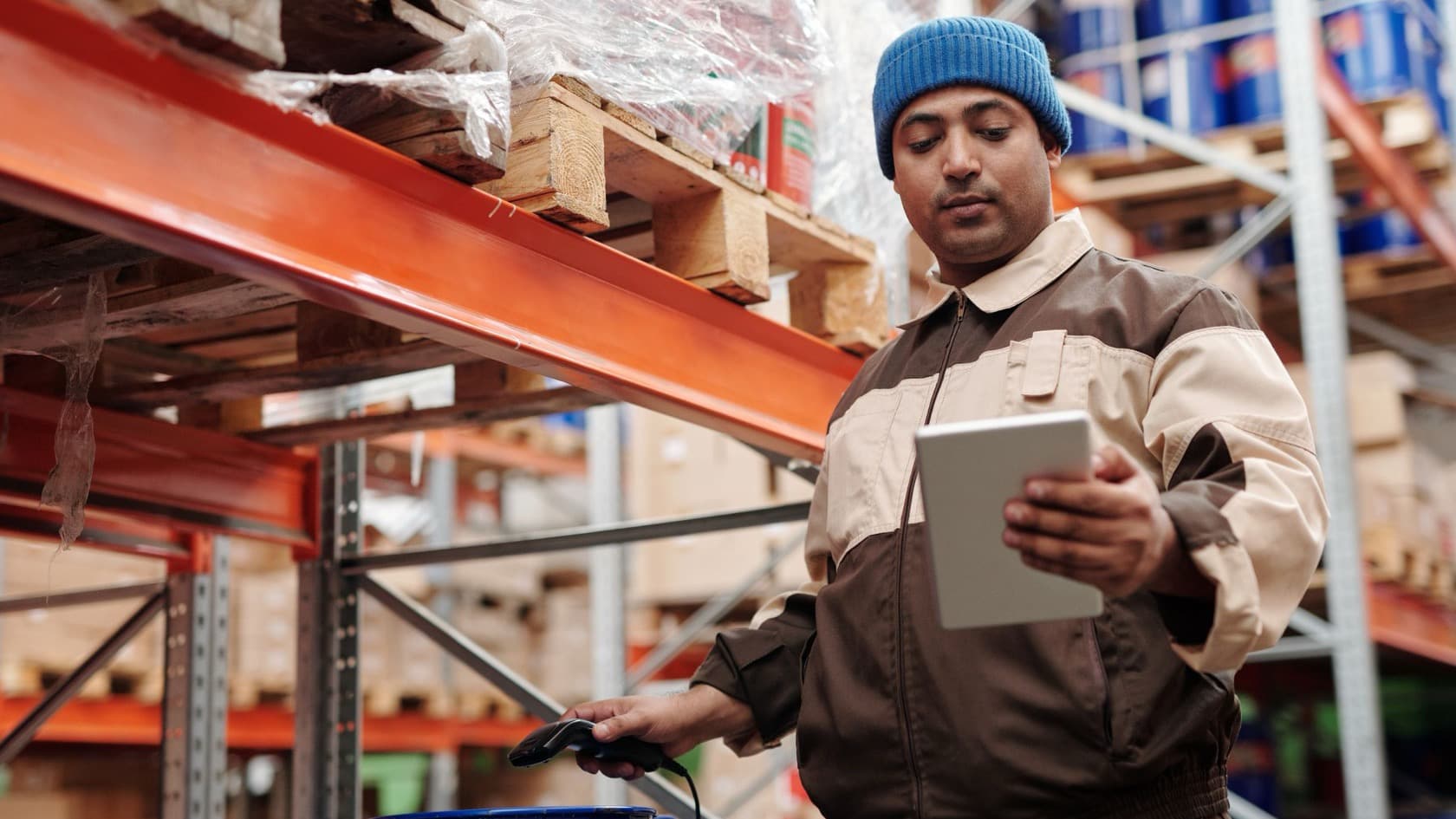
Picture a warehouse supervisor at the start of a shift. A delivery of cartons arrives, and staff record it at receiving before stowing it on the shelves. The stock count updates straight away, so it reflects what is physically in the building.
Later, an order comes in. Staff pick the items, pack them and pass the parcel to shipping, and the system records each step against the order. If a carton turns up damaged, staff log it as damaged stock instead of leaving it in the sellable count, where it would mislead the next order.
Before the shift ends, the supervisor checks the alerts. Items running low and items that need ordering are already flagged, so reordering starts from a list rather than from a walk around the aisles.
The result
Warehouse staff now record stock as it arrives and follow it through picking, packing and dispatch. Damaged and in-transit stock no longer inflate the sellable count, and alerts warn the team before items run out.
The system has also grown with the business. It later became the base for partner shop accounts that manage their own stock and orders, and shop registrations from the business's shopping app sync into it. Today the warehouse record is what links each shop to each order.
What the research says
Errors are the top reason to automate. Scanning hardware maker Zebra Technologies commissioned a study of more than 1,700 warehouse associates and leaders. In it, 71% of the leaders surveyed cited cutting errors as the top driver for warehouse automation (Zebra Warehouse Vision Study). Recording stock at receiving and following it through picking, packing and dispatch takes guesswork out of the count.
Too much time goes on tasks a system could do. The same Zebra study found 74% of warehouse leaders spend too much time on tasks that could be automated. It also found 84% agree that better operational visibility leads to smarter automated choices (Zebra Warehouse Vision Study). Low-stock and reorder alerts here fire on their own, and damaged and in-transit stock stay out of the sellable count.
Systems are expected to connect. API platform vendor Postman surveyed more than 5,700 people for its 2025 State of the API report. It found 82% of organizations have adopted some level of an API-first approach (Postman, 2025). Planning the sorting belt integration into the scope from the start keeps the belt and the stock records in step.
Where AI fits next
The warehouse runs without AI today; its movement history would support these next steps. A model could forecast demand per item from past orders, so reorder alerts fire earlier for fast movers.
It could flag stock counts that look wrong against recent movements for a supervisor to check, and summarize damage records by supplier or route to show where losses begin.
Planning something similar?
Before you build custom warehouse management software, it helps to answer four questions:
Which stock states must be counted separately, such as damaged, in transit or reserved?
What equipment, such as a sorting belt or scanners, does the software need to work with?
Who should be alerted when stock runs low, and at what level?
Which other systems, such as delivery, partner shops or an app, will need the same stock record later?
We built this warehouse system for the same business as its parcel delivery software and driver app. For more, see how we handle custom software and ERP and stock systems, or our explainer on predicting stock needs with analytics.
For related builds, browse our operations software work.