Manufacturing
Plant-wide ERP for a manufacturer
Sales, production, inventory and quality control used to keep separate records. Our custom ERP puts all four on one system, designed around how the plant actually works.
Bring sales, inventory, production and finance into a custom ERP built around your processes. We map the records each department needs, connect the systems you keep and plan a staged rollout. Start with the module that removes your biggest reporting or operational bottleneck.
Don't take our word for it. Ask AI about this service:
Order to production
Example
A new sales order for 600 units
Raise a purchase order for the material still missing?
An example with made-up figures. The buttons send nothing.
We follow an order from the first quote to the final invoice and write down how each department handles it today.
We start with the module that saves the most time, built around your steps instead of a generic template.
Each new module joins the same set of records, in the order that pays back first. You decide what comes next.
Start where your records disagree most. Each tab sets a problem you live with today against what your own ERP does about it.
An order entered by sales is the same order production plans and quality checks. No one retypes it or asks which version is right. We built this for a manufacturer, and four departments now work from one set of records.
Same recordsfor sales, production, stock and quality
Start a projectEvery receipt, issue and transfer updates the stock count the moment it happens. Sales checks real availability before quoting a date, and buyers see what to reorder without a separate count.
Livestock count, not last week's tally
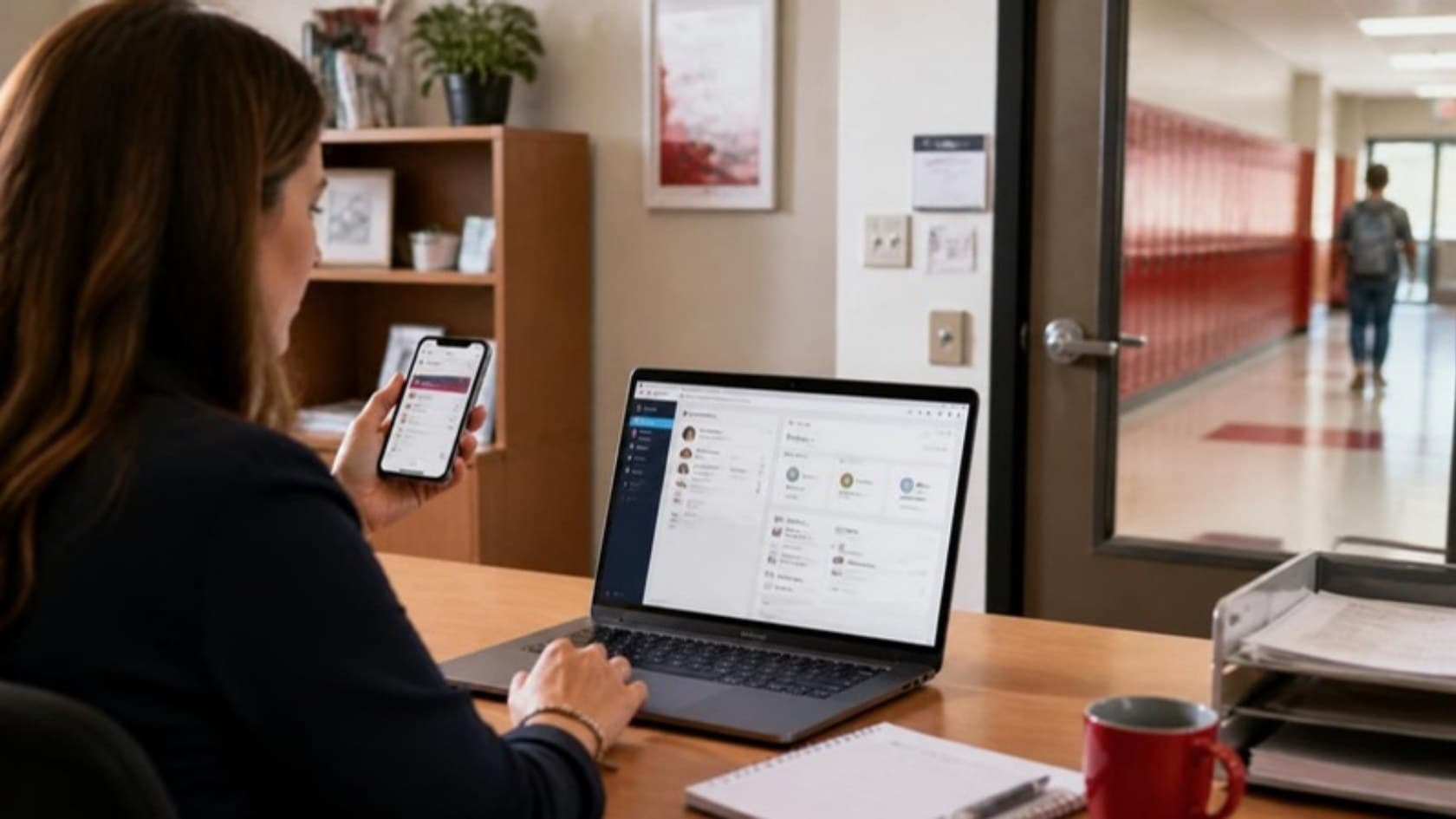
Start a projectOffice staff work in the browser; people on the floor or on the move use Android and iPhone apps on the same records. We built a school ERP this way, so staff needed no new hardware.
Any deviceweb, Android and iPhone
Start a projectCustom makes sense when the way you work is part of why customers choose you, or when a packaged system needs a workaround for every order. You can start with one module next to your accounting software and add the rest when each one has earned its place.
Your processkept as it is, with no template to bend to
Start a projectAn ERP runs the whole business, so handing it to a new team needs safeguards. Every ERP we build carries these four.
Every module is tried on a test copy with your own records first. It reaches the department only when the person you name approves it.
Your ERP and its records run in your own cloud account, under your name. Each person sees only the parts of the business their role needs.
You do not have to switch everything at once. The ERP connects to the accounting software, email and other tools you already run, so each module can start alongside them.
Every week you see which modules are finished, what is next and what has been spent against the plan. No surprises at the end.
Each stage ends at a decision point, and you can stop at any of them. In week three your planners are clicking through the first module, filled with your own products and customers.
Week 1
We follow your orders through each department and rank the modules by the time and errors each one would remove.
You end withA plan and a fixed price.
Weeks 2 to 3
A clickable version of the first module, filled with your own products and customers. The people who will use it tell us what is wrong.
You end withScreens your team has approved.
Weeks 4 to 8
We build the module with a working demo every week, connect it to the software you keep and have your IT team check it.
You end withA module your IT team has signed off.
Weeks 9 to 10
One department uses it first. We stay close, fix what daily use turns up and agree on which module comes next.
You end withA module in daily use, and the next one planned.
After launch we add modules in the order you choose, with a dedicated team or alongside your own staff.
Pick sales, production, stock or finance. On day five you hold a map of how an order really moves through your departments, and a price for the first module.
Free, 5 days
Keep the department map and the module ranking, whoever builds the ERP.
From clients in the US, Portugal, New Zealand and the UK.
What a custom ERP costs, when off-the-shelf is the better choice and what happens to the software you already run.
List the departments involved, the records each owns and the systems that must remain connected. Bring examples of orders, stock movements and reports, with sensitive details removed. Identify one module to prioritize and who will approve the migrated data and workflows.
The price moves with the number of departments and modules, the systems the ERP connects to and how much data comes across from your spreadsheets. We build one module at a time, so you pay for the first one before deciding on the rest. The free 5-day audit sets its fixed price, and you choose whether to go on from there.
When your process is part of what sets you apart, or when a packaged ERP needs so many workarounds that staff go back to spreadsheets. If a ready-made system fits you well, we tell you in the audit.
No. Many businesses start with one module, such as stock or production, running alongside the accounting software they already trust. The ERP passes figures to it, and you decide later whether finance moves across.
Yes. Office staff work in the browser, and people on the floor or on the move use Android and iPhone apps on the same records, on the phones they already carry.
You do, from the first day: the database with all your records and the source code, in accounts under your name, with full documentation. If we part ways, every record and every line of code stays with you, with nothing extra to pay.
One of our founders takes the first call. Our day overlaps yours by 3 to 4 hours in the US and UK, updates arrive where your team already works, and we reply within 4 business hours.
Each one shows what the client needed, what we built and the result, so you can judge how close it is to your own project.
Manufacturing
Sales, production, inventory and quality control used to keep separate records. Our custom ERP puts all four on one system, designed around how the plant actually works.
Education
Staff run school administration from a browser or the Android and iPhone devices they already own, so the school bought no new hardware to roll it out.
Education
Schools using an Indian school ERP can now reach the same records from a phone, through a mobile app connected to the provider's existing system.
Manufacturing
A manufacturer kept the ERP its team already knew and gained new functionality inside it, instead of moving to a new platform.
Operations and logistics
A custom ERP for an Indian trading exporter: stock by location, expiry and damage, low stock against order minimums and each customer's last price.
Operations and logistics
A multi-brand store in India now runs purchasing, consignment stock, billing, store credit, loyalty and staff commission in one ERP, with a daily email for the owners.
Operations and logistics
A Thai distributor now tracks stock from receiving to dispatch, keeps damaged and in-transit goods out of the sellable count, and gets alerts before items run out.
Manufacturing
An Indian colorant maker now follows each buyer from sample request to dispatch, checks every raw material receipt in QC, and sees cost by machine and batch.
Manufacturing
A web ERP for an industrial manufacturer: leads and quotations, bills of materials, stock from delivery challans and product test certificates.
Plain-language notes from our engineers on this kind of work, written for the owner who signs the check.
Free project estimate
Spend 30 minutes with a founder on how your orders move. You leave knowing which module we would build first, roughly what it would cost and how it would fit next to what you run today. If a packaged ERP suits you better, we say so.
What you get back
Don't take our word for it
Ask your AI about this service.
A few lines is plenty. You get a number before any call.