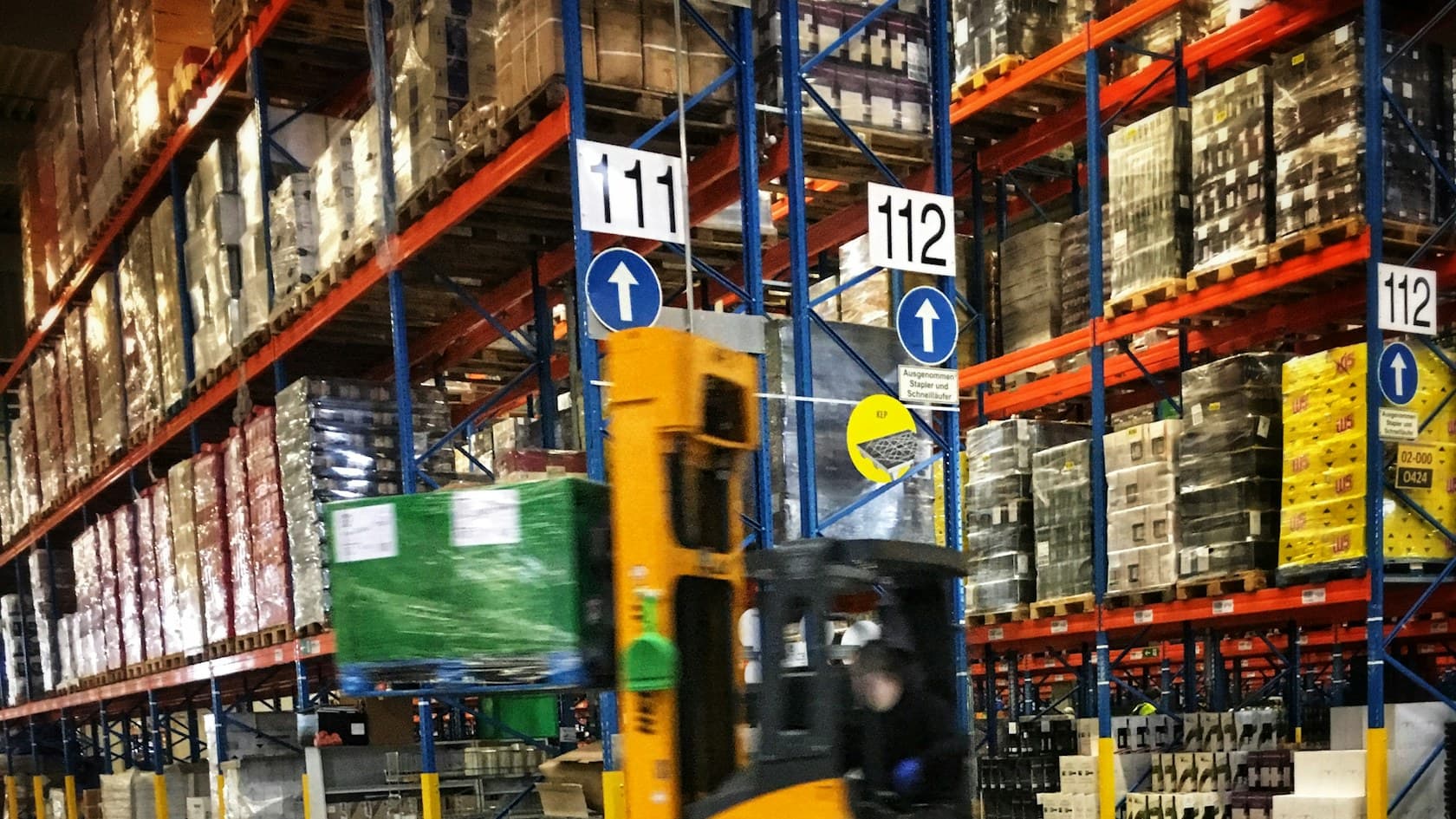
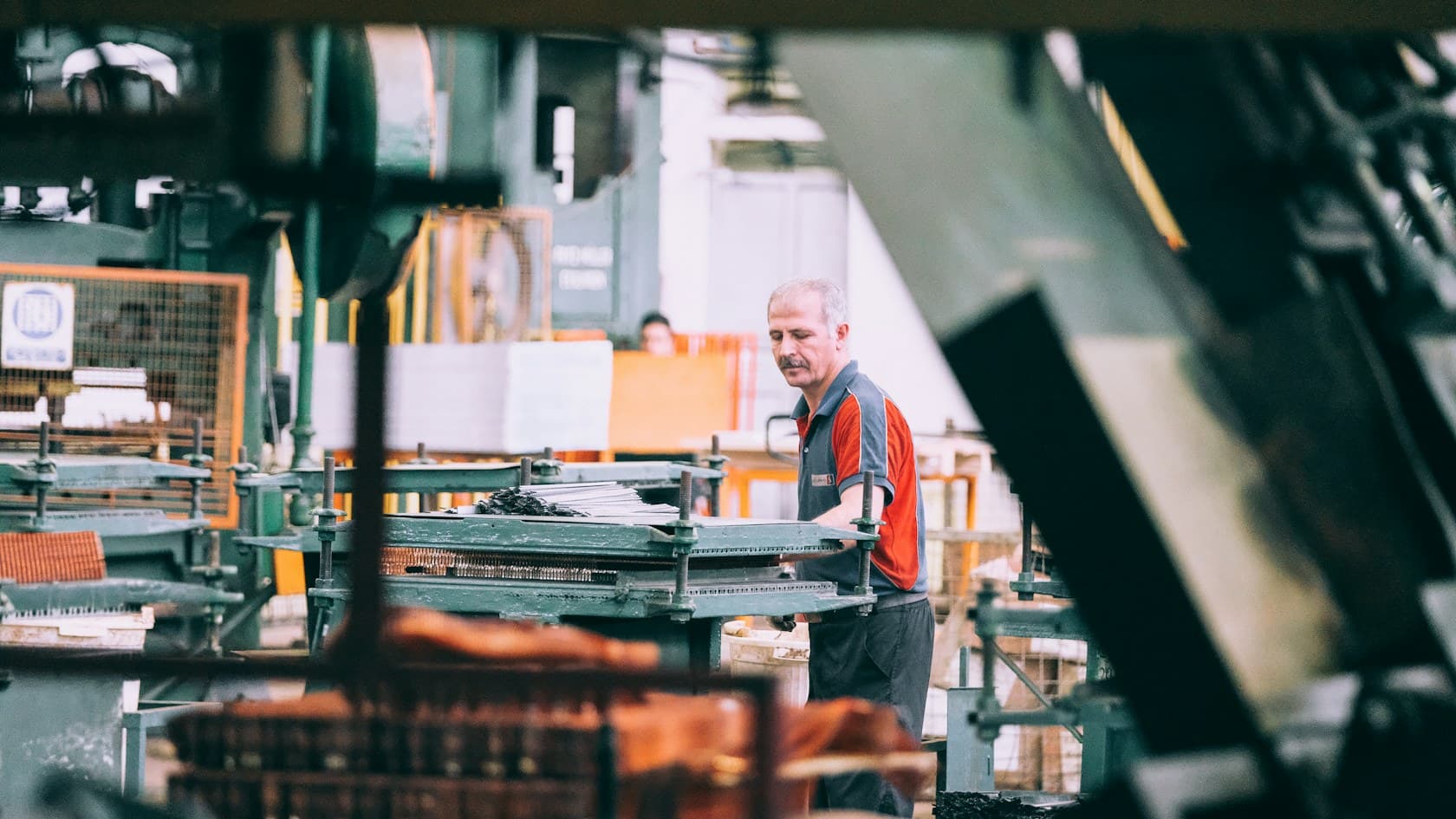
Ask a plant manager what AI means for manufacturing and you will hear about robots and lights-out factories. Ask which uses they are assessing and the answer is smaller and more useful: demand forecasts, assistants that retrieve an approved torque setting, and procurement workflows that collect supplier replies for review.
That is how AI is changing manufacturing for mid-size plants: in specific uses that pay back now, started without betting the year's budget on a pilot.
Where mid-size manufacturers stand
Mid-size firms are ahead of the average. The US Census Bureau found that 32% of firms with 100 to 249 employees used AI in 2026, against 17% to 20% of all businesses. In the EU, Eurostat put medium-sized enterprises at about 30%, well above the 20% average.
Using AI and profiting from it are different things. McKinsey's 2026 survey found that 80% of respondents said AI improved their own productivity, but only 37% saw any effect on earnings. We reviewed that research in detail in our report on AI adoption in mid-size businesses. The short version: the plants that see returns pick one process, change how the work is done, and measure it.
Six uses worth assessing on the shop floor
1. Demand forecasting that uses more than last year's numbers
Most plants forecast with a spreadsheet and a gut feel. A model trained on your order history, seasonality, promotions and lead times forecasts by product and by week, and shows its confidence. The payoff is fewer rush orders and less stock sitting in the warehouse. We covered the method in demand forecasting for manufacturers, and the stock side in inventory optimization with predictive analytics.
2. Maintenance that is planned, not reactive
Vibration, temperature and current readings from existing machines, fed to a model that learns what "about to fail" looks like, turn surprise breakdowns into scheduled jobs. The sensors are the cheap part; the discipline of acting on the alerts is where plants struggle. Our guide to predictive versus reactive maintenance explains where to start.
3. Standard operating procedures that answer back
Every plant has binders of SOPs that nobody reads at the moment they are needed. One manufacturer we worked with put theirs behind a chatbot that answers an operator's question and cites the exact step and document, so the answer is checkable rather than a guess. The same approach works for equipment service manuals: a dealer's technicians ask the assistant and get the page, not a search result.
4. Procurement that gathers quotes while people decide
Requesting quotes from three suppliers, chasing the ones that do not reply and lining the answers up in a table is a day's work that an AI agent does in the background. For another manufacturer we built an agent that collects supplier quotes for a purchase request and presents them for a buyer to approve.
The person still decides; the agent does the chasing. That pattern, with a human signing off, is the one we recommend for anything that spends money, and we explain why in human-in-the-loop AI.
5. Quotes and bills of materials from the inquiry
Engineering-to-order plants lose days between an inquiry arriving and a costed quote going out. Structured data from the inquiry, matched against past jobs and the parts catalog, gives estimators a draft bill of materials to correct instead of a blank sheet. This is usually an extension of the ERP rather than a separate tool.
6. Quality records that flag the pattern
Raw-material checks, batch results and customer complaints usually live in three places. Put them together and a model can tell you that complaints rise when a particular supplier's batches run near the tolerance limit. That is not science fiction; it is a join and a chart, with a model to watch it every day.
What the plants that get value do differently
The pattern across the research and our own projects is consistent.
They fix the data first. A forecast is only as good as the order history behind it. Our guide to data readiness for AI lists what to check before any model is built.
They start where the ERP already is. The system that holds orders, stock and production is the natural home for AI features, which is why our manufacturing ERP work increasingly includes forecasting and assistants from the start.
They keep people in charge of decisions. AI drafts the purchase order, the schedule change or the quote; a named person approves it. Trust builds, and so does adoption.
They measure one number. Stock-outs per month, unplanned downtime hours, days from inquiry to quote. If the number does not move in a quarter, they stop.
Why pilots stall, and how to avoid it
S&P Global found that 42% of companies abandoned most of their AI initiatives in 2025, up from 17% the year before. The reasons are rarely the technology. They are unclear value, messy data and a pilot that nobody owned once the consultant left.
The fix is to scope the pilot like a production change: one process, one owner on the plant side, a number to move, and a decision date. We wrote up the approach in how to scope an AI pilot project.
Where this is heading
The next step is agents that work across systems: an agent that notices a late supplier shipment, checks stock cover, proposes a schedule change and asks the planner to approve it. The pieces exist today.
What holds plants back is the plumbing between the ERP, the maintenance system and the supplier portals, and that is engineering work rather than research. Plants that have cleaned up their data and connected their systems will be able to adopt these agents in weeks. Plants that have not will be starting from the beginning.
See it in practice: Glass Quality Inspection Software with Tolerance Alerts
See it in practice: AI Procurement Agent for Supplier Quote Comparison
What to do this week with AI in manufacturing
Pick the process that costs you most, whether it is stock, downtime or quoting time, and ask what data about it you already hold. Our free 5-day AI readiness audit looks at one department and tells you where AI fits and what it would take. See how we work with manufacturers on our manufacturing software page, or book a 30-minute call.