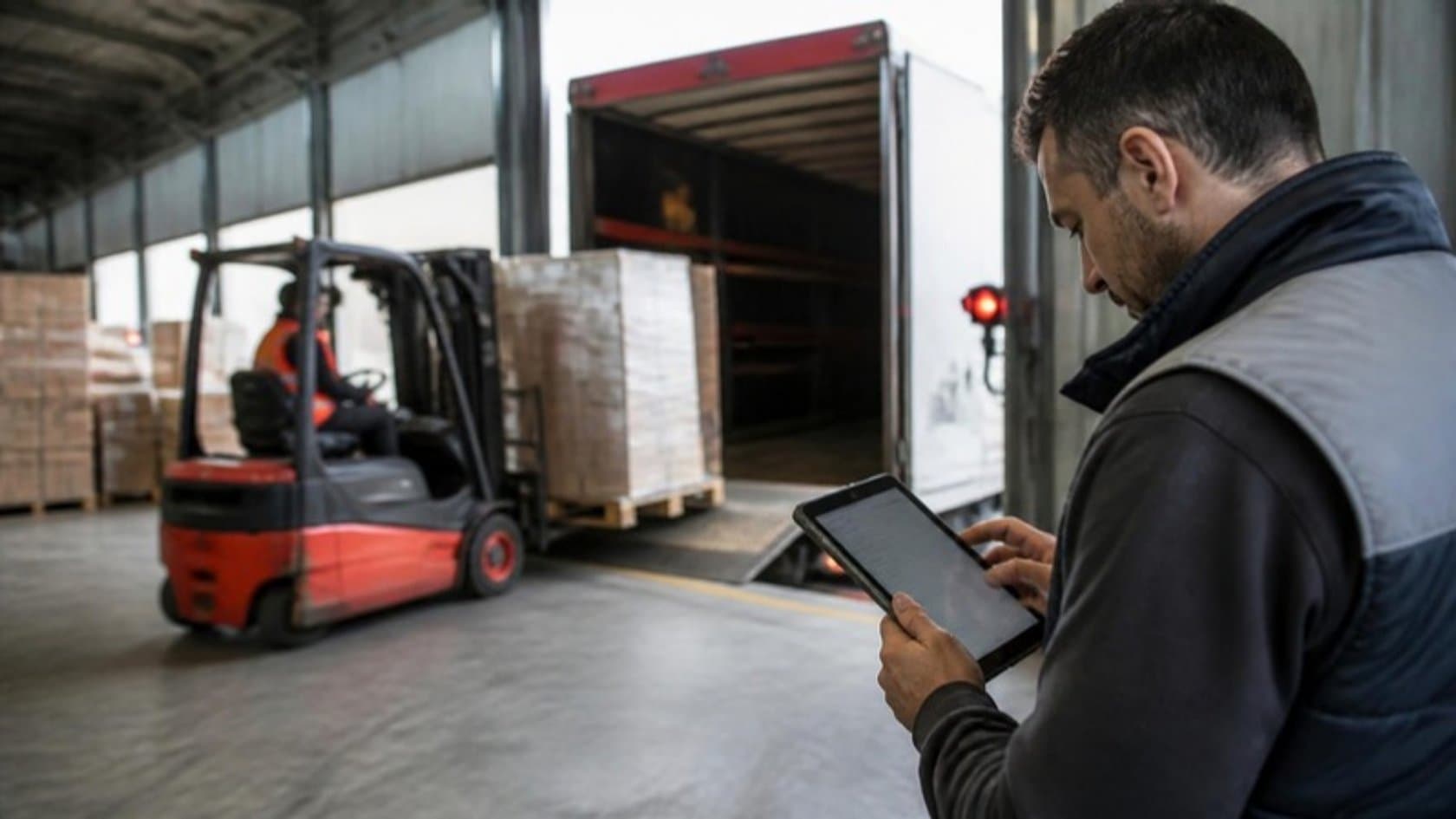
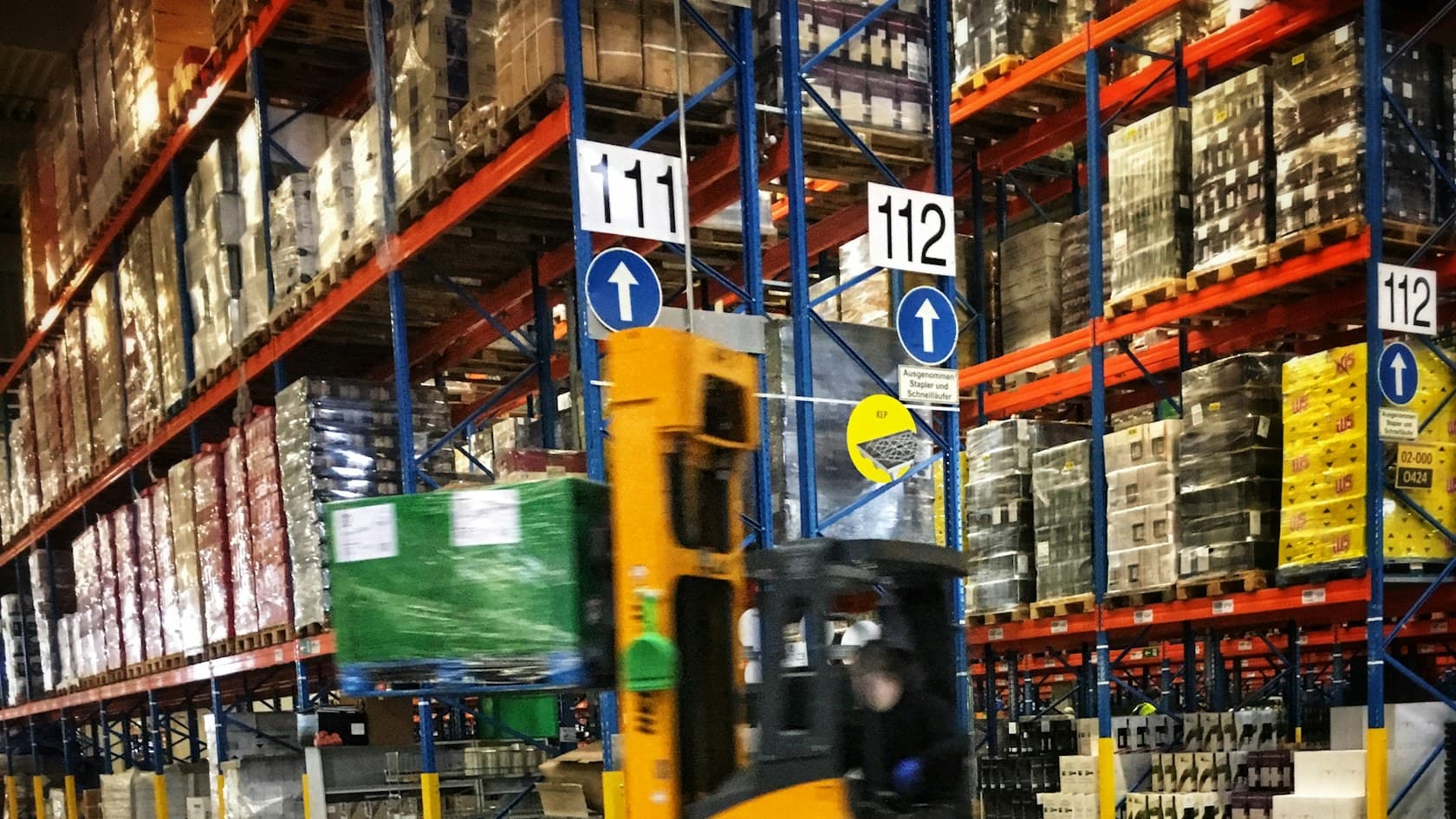
A distributor's margin lives in the gaps: the stock that sits too long, the shipment that arrives late without anyone noticing until the customer calls, the order typed into three systems.
AI in warehousing and distribution is mostly about closing those gaps, and the tools that do it are less exotic than the headlines suggest. This post looks at where AI is paying back for mid-size distributors and wholesalers, what it needs from your systems, and what the next few years look like.
Distribution is an information business with a warehouse attached
Every pallet moves because of a decision: what to order, where to put it, which order to pick first, which carrier to use, when to tell the customer. Those decisions are made hundreds of times a day, usually by experienced people with a spreadsheet and a phone. AI is good at exactly that kind of decision: frequent, repetitive, driven by data you already collect.
The constraint is rarely the model. It is whether the data about stock, orders and shipments is in one place and roughly correct. Our guide to ERP for distribution and wholesale covers the system side; this post covers what AI adds once that foundation exists.
Five uses paying back now
1. Reorder points that move with demand
Fixed reorder points are wrong twice a year: too low before the season, too high after it. A forecast per product, by location, that accounts for seasonality, lead times and promotions, sets the reorder point and the quantity each week. For a distributor the result is fewer stock-outs on fast movers and less cash tied up in slow ones. We explained the approach in inventory optimization with predictive analytics.
2. Shipment exceptions flagged before the customer asks
For a logistics operation we built an agent that watches shipments against their expected milestones, spots the ones running late or stuck, and tells the account manager with a drafted message to the customer. The team went from answering "where is my order?" to telling customers before they asked. The agent reads carrier updates and the order system; the person decides what to promise.
3. Documents that enter themselves
Supplier invoices, delivery notes, customs paperwork and purchase orders arrive as PDFs and emails. AI document processing reads them, matches them to the order and raises the exceptions, so staff handle the mismatches instead of the retyping. Our guide to intelligent document processing covers what it can and cannot read reliably.
4. Expiry, batch and location checks that never sleep
A trading ERP we built for an exporter tracks stock by location, checks expiry dates and remembers the last price for each customer and product.
Adding AI to a system like that means a daily digest of what will expire before it sells at the current rate, which locations are over-stocked relative to the orders they serve, and which customers' prices have drifted from the list. The information was always there; nobody had time to look.
5. Field reports and proof of delivery that turn into data
Drivers and field staff fill forms on phones. We built a parcel delivery app with signed proof of delivery, and a flow that turns form submissions into instant WhatsApp alerts with an AI digest at the end of the day. The digest answers the question a manager has: what went wrong today, and where.
What AI needs from your systems
Each of these uses depends on three things being true. If they are not, fix them first; the AI will not fix them for you.
One record per product, customer and location. Duplicates and free-text codes break every forecast and every match.
Stock movements recorded as they happen, from the warehouse floor, not at the end of the week from a notebook.
Systems that talk to each other. The online shop, the accounts package and the warehouse system need to share orders and stock. We have done that plumbing many times, from Shopify to an accounting ledger with AI mapping each sale to the right ledger and tax code, and it is usually the first project rather than the last.
Our checklist for data readiness for AI is written for exactly this situation.
Where this is heading
The next step for distributors is agents that handle a whole exception end to end. A late inbound shipment triggers a check of stock cover, a proposed substitution or a revised promise date for each affected customer order, and a message drafted for each account manager to approve.
Each piece exists today. The companies that will adopt it first are the ones whose stock, orders and shipments already live in connected systems, which is why the plumbing matters more than the model.
Automation of the physical warehouse, robots and automated storage, is real but remains a large-company investment for now. For a mid-size distributor, the returns in the next few years are in the information flow, not the forklift.
See it in practice: Freight Matching Platform for Air, Road and Sea Loads
See it in practice: Trading ERP Software for Stock, Purchasing and Sales
Your first step with AI in warehousing and distribution
Count last month's stock-outs and late shipments that a customer noticed before you did. If either number is bigger than you would like, that is the process to start with. See the kinds of workflow automation we build for distributors, or book a 30-minute call to talk through your systems.