
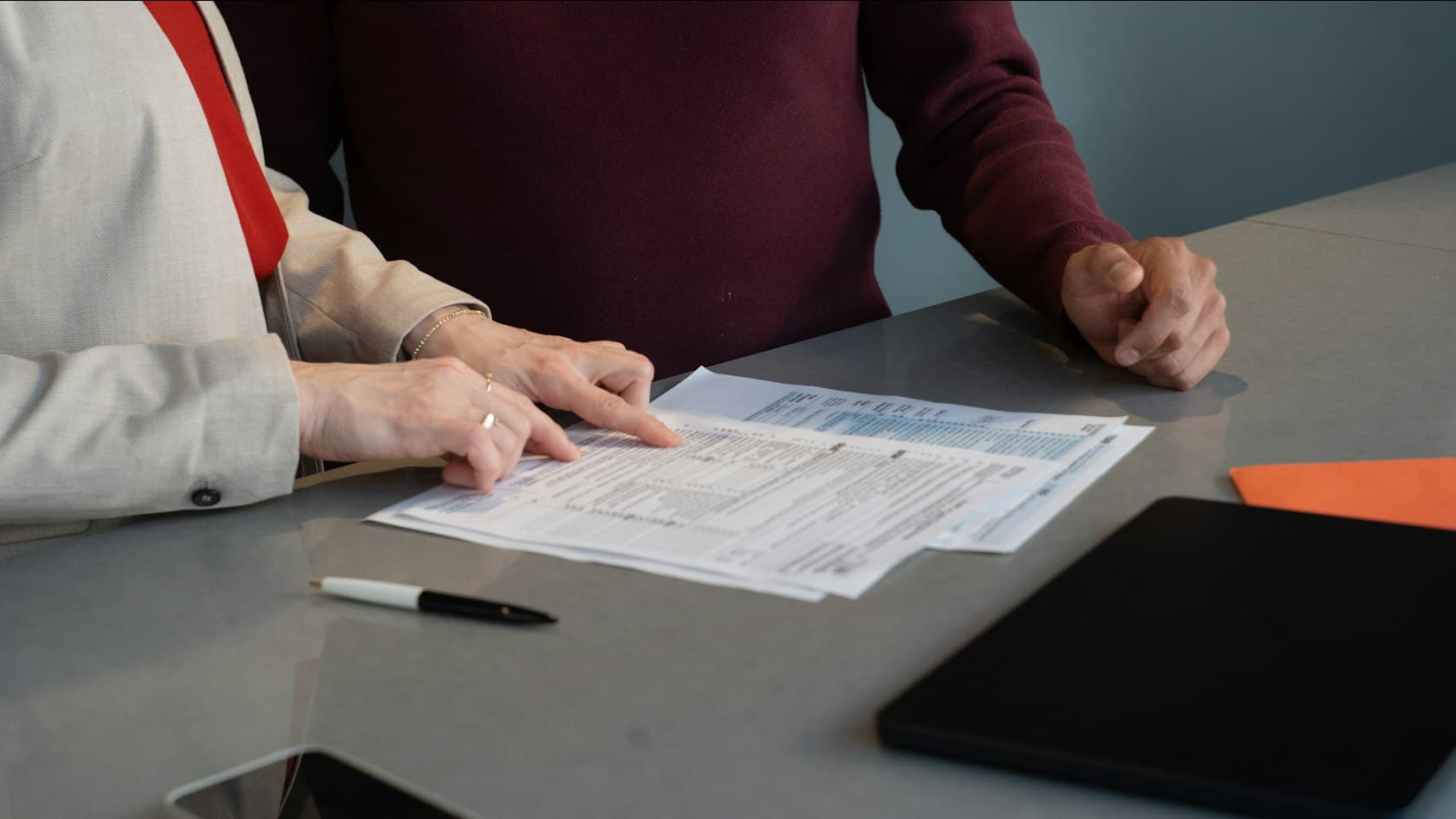
If you invoice customers in Europe, India or Saudi Arabia, a PDF emailed to a buyer may no longer count as an invoice in some of those markets. Tax authorities in a growing list of countries now require invoices to be structured data, and some want to see them before the customer does.
The question for a finance director is practical: can our ERP do this, and who pays to change it? This guide sets out the main mandates, with dates as the sources state them and checked on 25 October 2026, then gives you a checklist and a table of questions for your ERP vendor.
What the Mandates Say Today
Rules differ by country, so start with the ones that touch your customers and subsidiaries. Dates below come from the sources named, as of 25 October 2026, and several of them can still move.
EU, ViDA. The European Commission says the VAT in the Digital Age package was adopted on 11 March 2025. Member States may require e-invoicing under specific conditions from 14 April 2025, and digital reporting requirements apply from 1 July 2030.
Belgium. The Belgian federal finance service's e-invoice portal says that from 1 January 2026 structured electronic invoicing is compulsory for nearly all transactions between Belgian VAT-liable businesses, and its FAQ says invoices should be exchanged via the Peppol network. EY reports that the authorities announced a tolerance period covering the first quarter of 2026 for certain breaches, with conditions. The portal's FAQ warns that a supplier or customer that is not ready risks a penalty, so check the current position with your adviser.
Poland. The Ministry of Finance's KSeF site says mandatory use started on 1 February 2026 for businesses whose 2024 sales including VAT exceeded PLN 200 million, and on 1 April 2026 for all other businesses. Its Q&A page adds that taxpayers whose monthly invoiced sales stay at or below PLN 10,000 may issue invoices outside KSeF until the end of 2026, and that penalties for KSeF errors were postponed to 1 January 2027.
France. EY's alert gives 1 September 2026 for receiving invoices (all companies) and for issuing by large and mid-size companies, and 1 September 2027 for SMEs and micro-enterprises. EY's note on the tax authority's guidance of 10 July 2026 says the implementation timetable remains unchanged, and that invoices arriving through legacy channels in the starting phase should not be rejected if they relate to a real transaction. Vendor Avalara's July 2026 guide says invoices must travel through a state-registered approved platform. The French government sites were unavailable when we checked, so confirm the dates there.
Germany. The Cologne chamber of commerce (IHK), summarizing the finance ministry's letter of 15 October 2025, says since 1 January 2025 every domestic business has had to be able to receive e-invoices. Under the transitional rule in section 27(38) of the VAT Act, paper and non-compliant electronic invoices stay allowed until 31 December 2026, and until 31 December 2027 for businesses whose turnover in the previous calendar year was no more than 800,000 euros. In practice, larger companies must issue structured e-invoices from 1 January 2027 and smaller ones from 1 January 2028.
India. EY's alert on Notification 10/2023 says that from 1 August 2023 e-invoicing applies to taxpayers with aggregate turnover exceeding INR 5 crore in any preceding financial year. The government-run invoice registration portal says that, effective 1 April 2025, taxpayers with annual aggregate turnover of INR 10 crore and above must report e-invoices within 30 days of the invoice date, for invoices, credit notes and debit notes.
Saudi Arabia. ZATCA brings taxpayers in by waves. EY reports that wave 24 covered taxable turnover above SAR 375,000 in any of 2022, 2023 or 2024, with compliance between 1 April and 30 June 2026. ZATCA's own announcement says wave 25 covers taxpayers whose VAT-subject revenue exceeded SAR 187,500 in any of 2022 to 2025, who must connect by 1 February 2027, and that later waves get at least six months' notice. Confirm where your entity stands.
United States. A 2024 US-EU joint declaration on e-invoicing interoperability states that the United States, unlike the EU, lacks any rule aimed specifically at e-invoicing and leans on industry initiatives and solutions led by the market. It describes cooperation on alignment, not a mandate. The Treasury's Invoice Processing Platform lets vendors submit invoices to enrolled federal agencies at no cost, and some agencies or contracts may require it, so check yours. Your European customers may also ask you for Peppol invoices.
These are official pages where we could reach them, and otherwise summaries by advisers, chambers and vendors. None of it is legal advice. Governments change dates, thresholds and penalties, so confirm each one with the tax authority or your adviser.
Why Your ERP Is the Real Pressure Point
Most of these rules are not about a new document. They are about a new flow. The invoice must be created as structured data, often checked by the authority or a network, and stored in a form that can be read later. An ERP built to print a PDF invoice and email it was not designed for that.
Most of the rules also ask for the same underlying standard. The Peppol BIS Billing 3.0 specification says that documents that follow it will also meet the European Standard (EN 16931), and the French guide above lists Factur-X, UBL and CII, all aligned with EN 16931. ZATCA's detailed guidelines say that phase 2 tax invoices must be submitted in XML format and that tax invoices are cleared by the authority, while vendor Invopop's documentation describes the XML as UBL 2.1 (vendor data, not confirmed in the ZATCA guideline). In our view, a well-built ERP can support the shared core once and add country layers, while a poorly built one needs a separate fix for every country.
The ERP Readiness Checklist
Work through these with your finance and IT leads. In our experience, each item is a place where projects stall.
Formats. Can the system produce EN 16931 invoices in UBL or CII, and the national variants you need, such as Peppol BIS Billing, XRechnung or ZUGFeRD?
Network or clearance connection. Does it connect to a Peppol access point, a French approved platform, KSeF, the Indian invoice portal or ZATCA, and who maintains that connection?
Real-time clearance. Where an invoice must be approved before it goes to the buyer, as Saudi clearance does for B2B invoices, what happens if the authority's system is down? Is there a queue and an offline mode?
Tax-code mapping. Do your VAT, GST and exemption codes map to the codes the format expects, and do they work for credit notes, advances and reverse-charge sales?
Master data. Do customer and supplier records carry the tax IDs, network addresses and legal entity details the formats need?
Status messages. Can the ERP receive accepted, rejected and paid statuses back and show them to the accounts team?
Archiving. Are the original structured files stored unchanged, for the retention period each country sets, and can you retrieve them for an audit?
Incoming invoices. Can accounts payable read structured invoices, match them to orders and receipts, and handle rejections?
Customer and supplier onboarding. Do you know which trading partners can send or receive e-invoices, and who contacts the ones that cannot?
What to Ask Your ERP Vendor
Put these questions in writing and ask for dates, not promises. If the vendor relies on a partner or add-on, ask who is responsible when a rule changes.
Ask | What a good answer sounds like | Warning sign |
|---|---|---|
Which countries and formats are supported today? | A list by country with release numbers, and customers already live | "On the roadmap" with no date |
Who connects us to Peppol, KSeF, the French platforms, the Indian portal or ZATCA? | A named certified provider or built-in module, with support hours | "You can use any provider," with no tested integration |
How do you handle rule and schema changes? | Updates included in the support contract, with notice before each deadline | Each change is a paid project |
What happens when the authority's system is down? | Queued invoices, retries and a documented offline process | Invoices fail and staff retype them |
How are original files archived? | Unaltered storage, searchable by invoice, for each country's retention period | Only a PDF copy is kept |
Can we test before go-live? | A sandbox connected to the authority's test environment | First test happens in production |
What does it cost? | Licence, per-invoice fees and set-up, itemized | A single bundled figure |
Onboarding Customers and Suppliers
The ERP is only half the work. A format your customer cannot receive is a rejected invoice, and a supplier who sends a PDF after the deadline leaves you with a document you may not be able to process.
Start with a list of your top customers and suppliers by invoice volume and sort them by country. For each, record how they will receive or send invoices, their network address or tax ID, and whether they have tested. In Germany and France, receiving is expected before issuing, so even a small buyer may already have an address. Plan one test run per partner before the first real invoice, and tell partners early. Their finance team may need time to set up a connection.
Fix the System Around the ERP
A mandate rarely requires a new ERP. More often it needs a clean layer between your ERP and the networks: one place that builds the structured file, validates it, sends it, collects the status and archives it. The same layer can cover several countries, and it protects you if you change ERP later. It also gives your accounts team one screen to see what was accepted, rejected or stuck.
If your ERP is custom or heavily modified, check how it will carry the changes before an upgrade. Our guides on ERP implementation mistakes and legacy application migration cover where such projects go wrong, and the invoice flow is a good time to review accounts payable automation and your month-end close, since both depend on clean invoice data.
Where to Start
This quarter, do three things. List the countries where you issue or receive invoices and check the current rule for each. Send the vendor questions above and compare the answers to the checklist. Then pick one partner and one country for a test run, so you learn where the gaps are while the deadline is still ahead of you.
If you want an independent view of your ERP, our ERP development team can map the gaps and build the integration layer, and our software consulting team can review a vendor's answers with you. Book a call to talk through your countries and timeline.